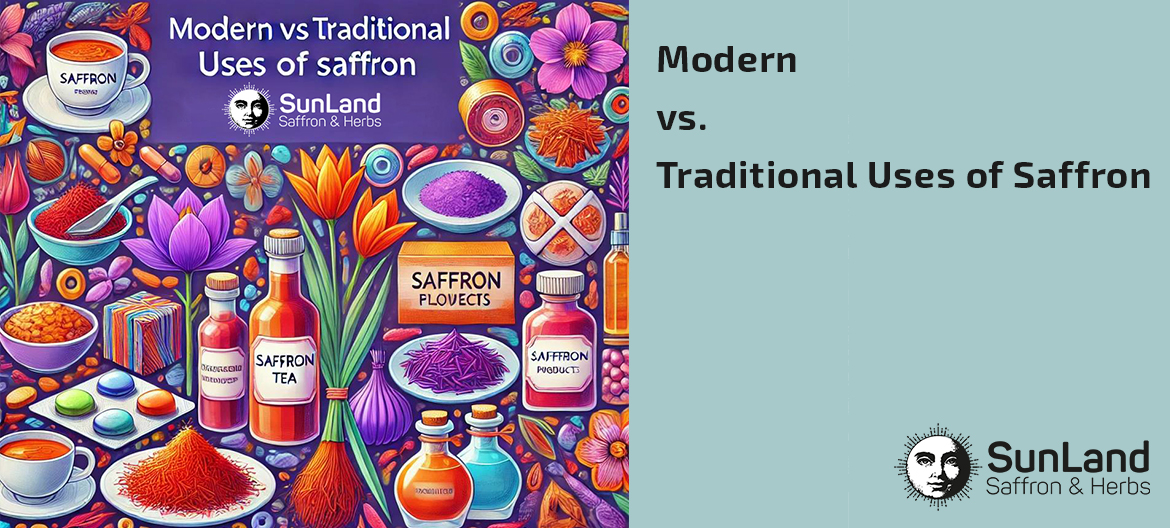
Saffron is a very valuable spice as it has found many industry applications. In the past, saffron had limited and simple usages, however, it has found many applications in different industries. With respect to the modern usage of saffron, as explained below, it is obvious that this valuable spice has become more and more popular among different industries. You can compare the traditional and modern usages of saffron in the following lines:
Traditional Uses of Saffron:
Culinary Purposes: Saffron is widely used as a spice and food coloring agent in traditional cuisines, particularly in Mediterranean, Middle Eastern, and Indian dishes. It adds a unique flavor and vibrant yellow color to dishes like paella, biryani, risotto, and desserts like saffron rice pudding.
Medicinal Properties: Saffron has been used in traditional medicine for its potential health benefits. It is believed to possess antioxidant, anti-inflammatory, and antidepressant properties. It has been used to treat conditions like depression, asthma, menstrual disorders, and digestive issues.
Perfumery: Saffron’s aromatic qualities make it a popular ingredient in perfumes and fragrances. It adds a warm, rich, and exotic note to various scents.
Religious and Cultural Practices: Saffron holds significant religious and cultural value in some cultures. It is used in rituals, ceremonies, and as an offering in religious practices and festivals.
In Islamic and Middle Eastern contexts, saffron has also been discussed in relation to religious traditions, halal consumption, perfume, and cultural symbolism. You can read more aboutsaffron in the Quran and Islamic traditions.
Modern uses of saffron:
Pharmacological and medicines: Today, saffron is a key ingredient in numerous modern pharmaceuticals. Its antioxidant and anti-inflammatory properties make it beneficial for eye health, alleviating PMS symptoms, improving cognitive function, and enhancing mood.
Cosmetology and perfumery: Saffron’s antioxidant and skin-brightening properties made it popular option for cosmetic and perfumery products. It is used in creams, lotions, masks, and serums to improve skin tone, reduce blemishes, and promote a youthful appearance.
Food industry: In modern food processing, saffron continues to be valued for its distinctive flavor and aroma. It is used in sauces, baked goods, chocolates, beverages, ice creams, and many other recipes, adding a touch of luxury.
Aromatherapy: Saffron essential oil is used in aromatherapy for its calming and relaxing effects. It is believed to help reduce anxiety, improve mood, and promote emotional balance.
Paper production: Recently, Iranian researchers found out that saffron can be used to produce papers. this has not turned into mass production yet.
Textile dying: Saffron’s natural yellow color is used in textile dyeing processes to create vibrant and long-lasting hues to fabrics and garments.
Conclusion:
In conclusion, saffron is a remarkable spice that has been cherished for centuries, both for its culinary appeal and its potential health benefits. This golden spice has found its place in traditional medicine, cultural practices, and modern applications, showcasing its versatility and significance. On the other hand, in modern times, saffron has found its way into the food industry, cosmetics, skincare products, nutraceuticals, aromatherapy, and textile dyeing. Its unique properties make it a sought-after ingredient, adding a touch of elegance and value to a wide range of products.to use and order Iranian saffron, it is best to buy from reputable resources like SunLand saffron.
Spain, alongside Iran, is recognized as one of the oldest cultural centers of saffron production and consumption. While Iran dominates global saffron cultivation, Spain has positioned itself as a leading …
Saffron remains one of the most coveted spices in the world, prized for its aroma, flavor, and health benefits. If you’re wondering about the saffron price in the UK, this …
What Parameters Determine Organic Saffron? Organic saffron is gaining popularity across the culinary, medical, and cosmetic industries as market trends shift toward healthier, more sustainable food sources. This article outlines …
Saffron Price in Canada: A Comprehensive Guide for 2025 Canada has seen a growing demand for premium-quality saffron, fueled by multicultural culinary traditions and rising awareness of its health benefits. …